Confirmed · Bath · Town
Edward Street
London street with carriages. Public street viewing only; residential buildings are not visitor attractions; allow 20–60 minutes.
- On screen as
- London street with carriages
- Appears in
- Series 3
- Access
- Public street viewing only; residential buildings are not visitor attractions
- Time needed
- 20–60 minutes
- Area
- Bath, Somerset
On screen
How Edward Street appears
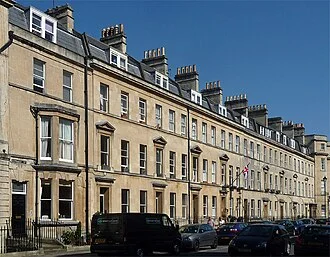
Edward Street appears in Bridgerton's third series as part of the production's Georgian London. Visit Bath identifies filming on this residential street near the Holburne Museum, including horses, carriages and period-costumed extras. It explains that gravel disguised the modern road surface for the shoot, with scenes concentrated near the junction with Great Pulteney Street.
The real street is still a lived-in part of Bath, so a useful visit concentrates on the public streetscape: the stone terrace, regular windows, railings and its relationship to the grander road nearby.
The real place
What you can visit
Plan Edward Street as a short stop on a central Bath walk rather than as a stand-alone attraction. The official filming account places it close to the Holburne Museum, making it straightforward to connect the two public locations in an itinerary. Use ordinary pavements and crossings and keep the carriageway clear; the quietness of a television scene is not evidence that the street is pedestrianised.
The buildings supply the lasting visual character, while the gravel, horses and costume crowd belonged to the production. Compare the terrace proportions and junction arrangement with a scene reference without expecting those temporary additions to remain. The photograph here shows the real street with present-day vehicles, which is an honest guide to the setting visitors encounter.
There is no location admission or house tour implied by this filming credit. Residential doors, basement areas and gardens should remain outside your visit. If you want to photograph the terrace, choose a public position that does not obstruct pavements or focus unnecessarily on residents.
A wider streetscape view is more useful than trying to inspect one particular window or entrance. For arrival, organise a city-centre walk around Bath's public visitor information and your chosen transport. Do not rely on parking directly on Edward Street; use lawful city parking arrangements or approach on foot from the centre.
The Holburne Museum has its own opening and admission programme if you intend to go inside, so check that separately. The street stop itself works best when it is a brief architectural pause within a day that already includes museum, garden or other public Bath locations.
Notice the way Edward Street meets Great Pulteney Street before taking photographs. That junction explains the production's choice better than attempting to recreate a carriage scene, and keeping the stop on the pavement respects its residential character.
Read the filming evidence ↗Plan your visit
Make it part of a workable day.
Combine it with the Holburne Museum's Danbury-house facade and a walk along Great Pulteney Street. Abbey Green, Bath Street and Trim Street can form the central-city portion of the same route, with breaks and museum admission planned separately.
Nearby
Continue through Bath
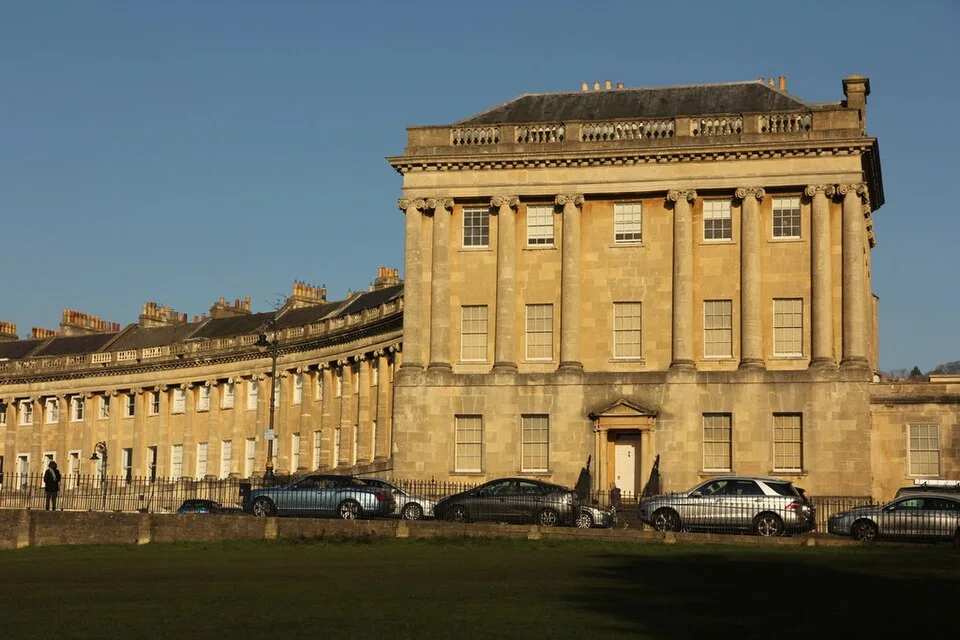
No. 1 Royal Crescent
Featherington House exterior
See the location →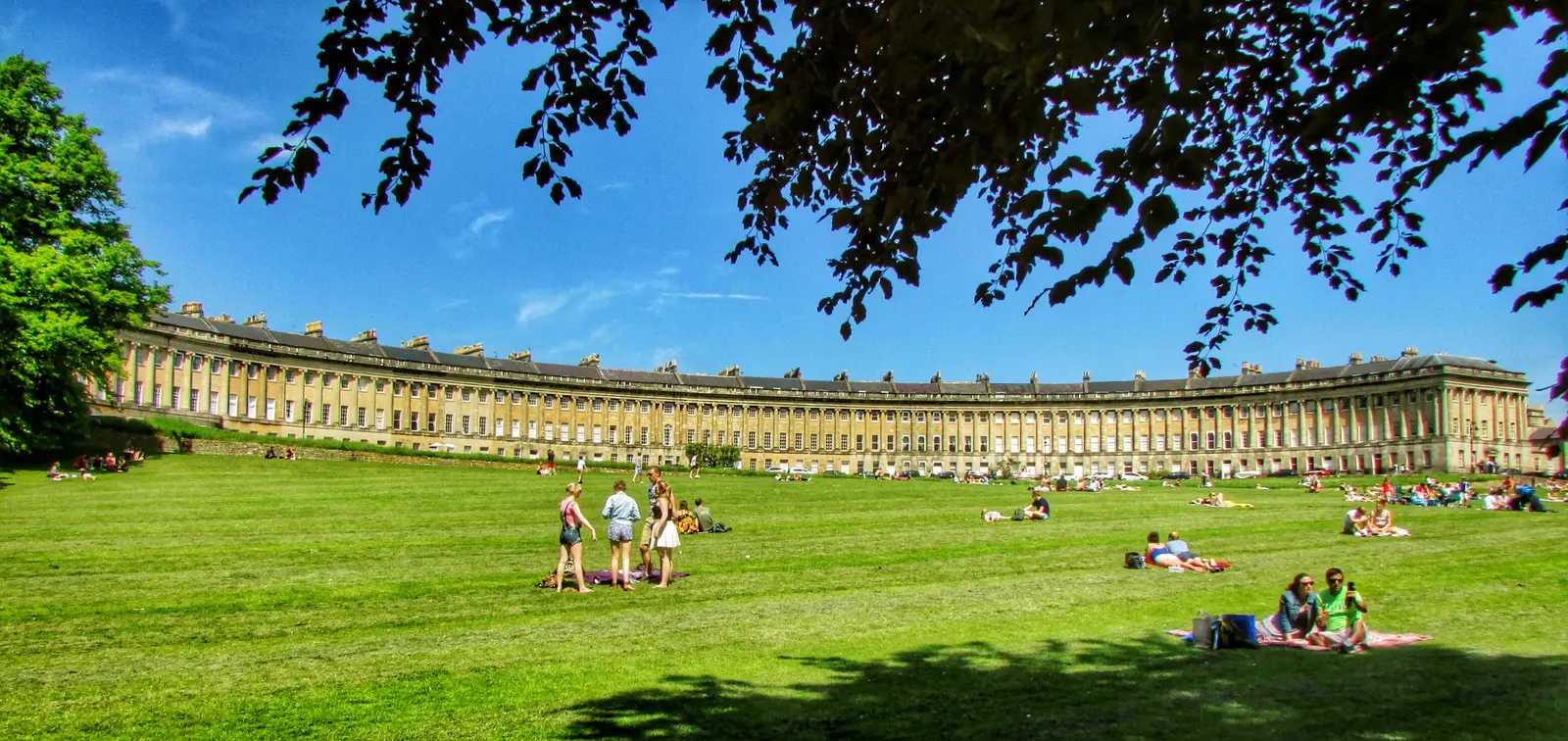
Royal Crescent
Regency London streets
See the location →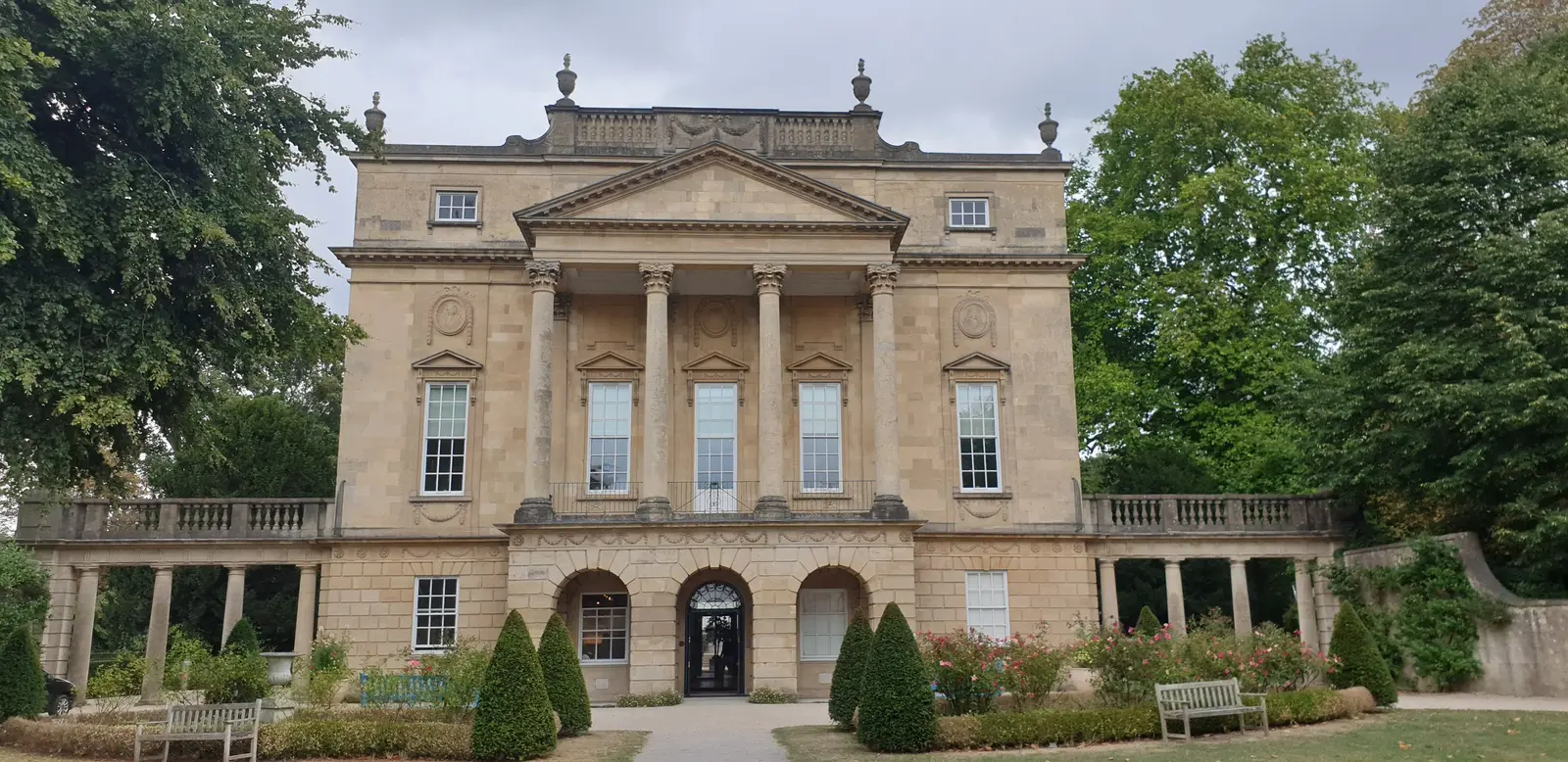
Holburne Museum
Danbury House facade
See the location →