The Location Ledger

Shows

The Cotswolds filming guide

Where was Father Brown filmed?

The Cotswolds villages, churches and heritage attractions used for Kembleford, with access notes for a responsible visit.

This guide covers television series locations in The Cotswolds.
An illustrated Cotswolds church lane with a vintage bicycle and detective notebook
Illustration (AI-generated), inspired by the The Cotswolds setting.

Plan a first visit

Geographic coverage: Kembleford core; North Cotswolds; Winchcombe & Stanway; Central Cotswolds; Cheltenham; Eastern edge; Severn Vale; Worcester & Malvern; Warwickshire; Seaside excursion.

Coverage in this guide: 44 public-place records have photographed location pages. 30 main location records fall outside the public-page count because of their access classification.

These are catalogue counts, not a promise of admission. A photographed public place may still need a ticket, an open day or permission for a particular interior. Read its access notes before travelling.

Start with Blockley

Kembleford village

Read the location guide →

A first trip: Blockley village walk

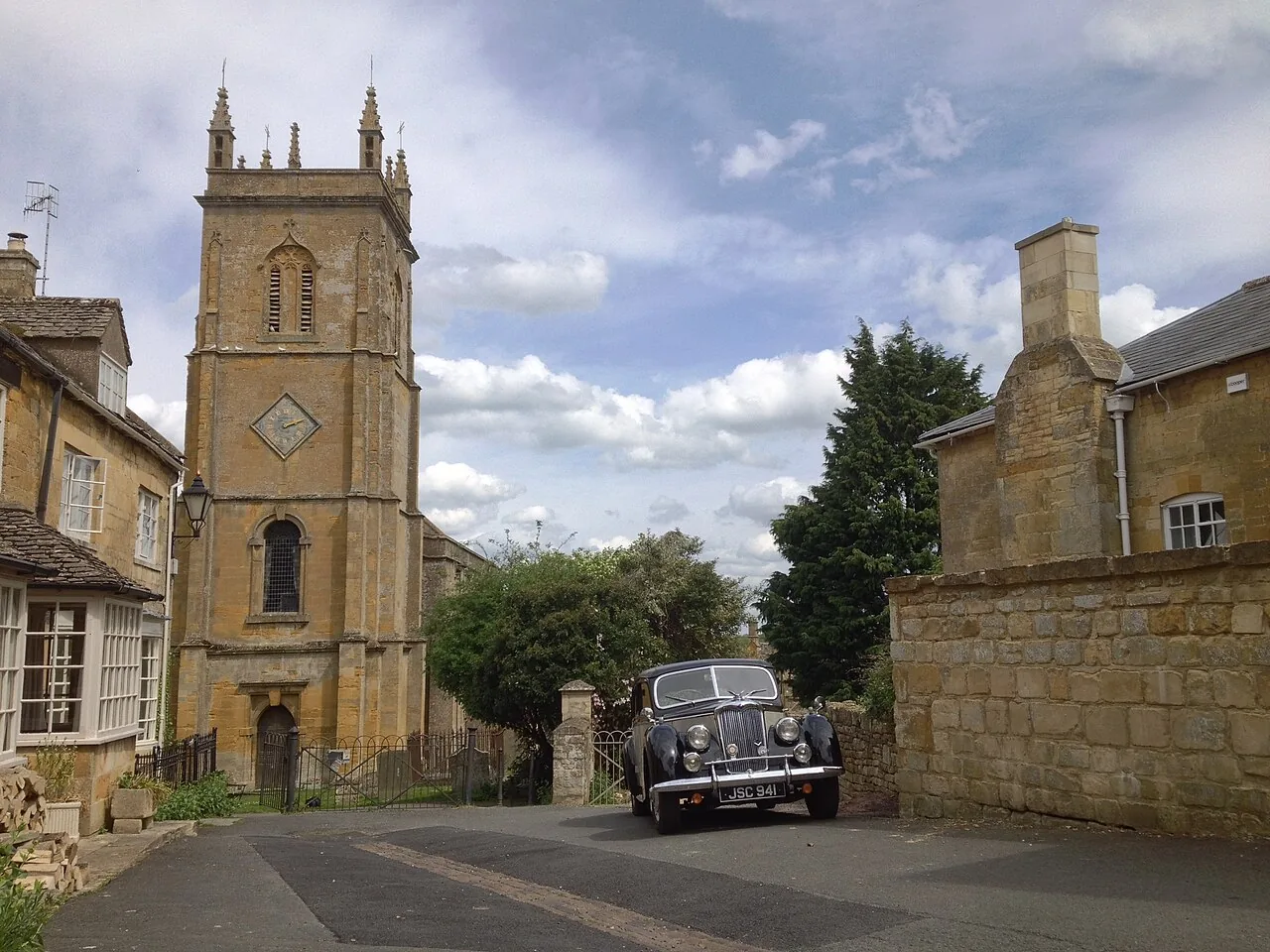
Begin with the village streets and working parish church. Keep residential doors and services separate from the public walk.

Plan this visit →

Choose a visit that fits

Use these as starting points, then check the named venue’s current arrangements for your visit.

For photographs

Snowshill’s admitted outdoor views

Choose the normal visitor route at Snowshill Manor and Garden for personal outdoor photographs. Check seasonal admission and ask staff before using a camera indoors; the National Trust does not permit indoor flash or tripods. Commercial photography requires separate agreement.

Plan this visit · Official information ↗

Without a car

Keep the Gloucester stops together

Choose the existing cathedral-and-docks cluster on foot rather than adding the separate castle driving leg. Plan arrival and the walk to the cathedral and National Waterways Museum independently. Pavement surfaces and the complete arrival route have not been audited.

Plan this visit · Official information ↗

With children

Gloucester Cathedral’s discovery guide

Consider the cathedral’s Family Discovery Guide for a visit that gives children an activity beyond scene matching. Check current services and activity availability; the Tribune Gallery has no level access and tower tours exclude under-sixes.

Plan this visit · Official information ↗

Plan for access needs

Gloucester Cathedral with a specific access check

The cathedral describes a level South Porch approach, accessible toilets and uneven stone floors. Its current notice reports a broken lift and no level access to the East End, so agree the usable route with staff before travelling.

Plan this visit · Official information ↗

A wet-weather option

A cathedral visit around the service calendar

Choose Gloucester Cathedral’s indoor architecture and family guide as a shorter wet-weather alternative to a rural circuit. Services and special events can change visitor access, so check the daily calendar first.

Plan this visit · Official information ↗

Where to startBlockley
Can you visit?46 listed places have public access
What this coversTelevision series · The Cotswolds

On screen and in the real world

Fictional places and where they really are

Kembleford villageBlockleyCustomers welcome
St Mary’s Roman Catholic Church, KemblefordChurch of St Peter & St PaulOpen to visitors
Father Brown’s presbytery exteriorBlockley VicaragePrivate
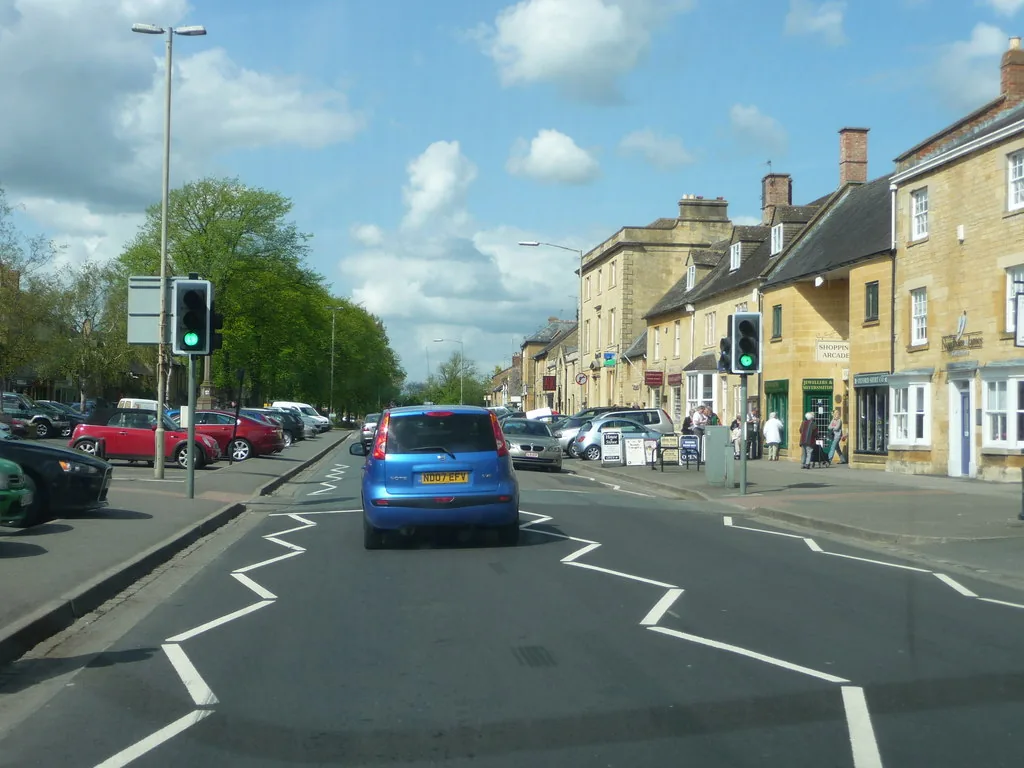
Kembleford-area streets and period town scenesMoreton-in-MarshCustomers welcome
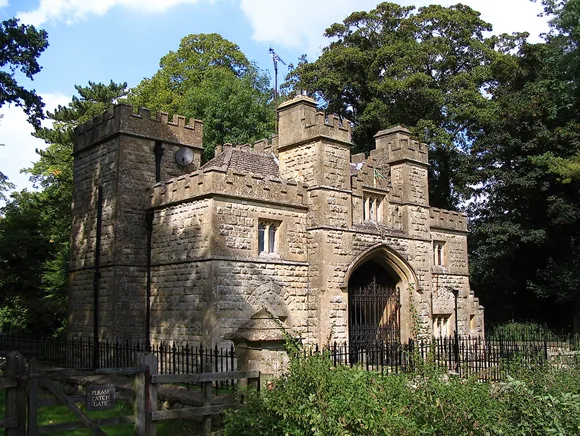
Stately-home and chapel scenesSudeley CastleTickets needed
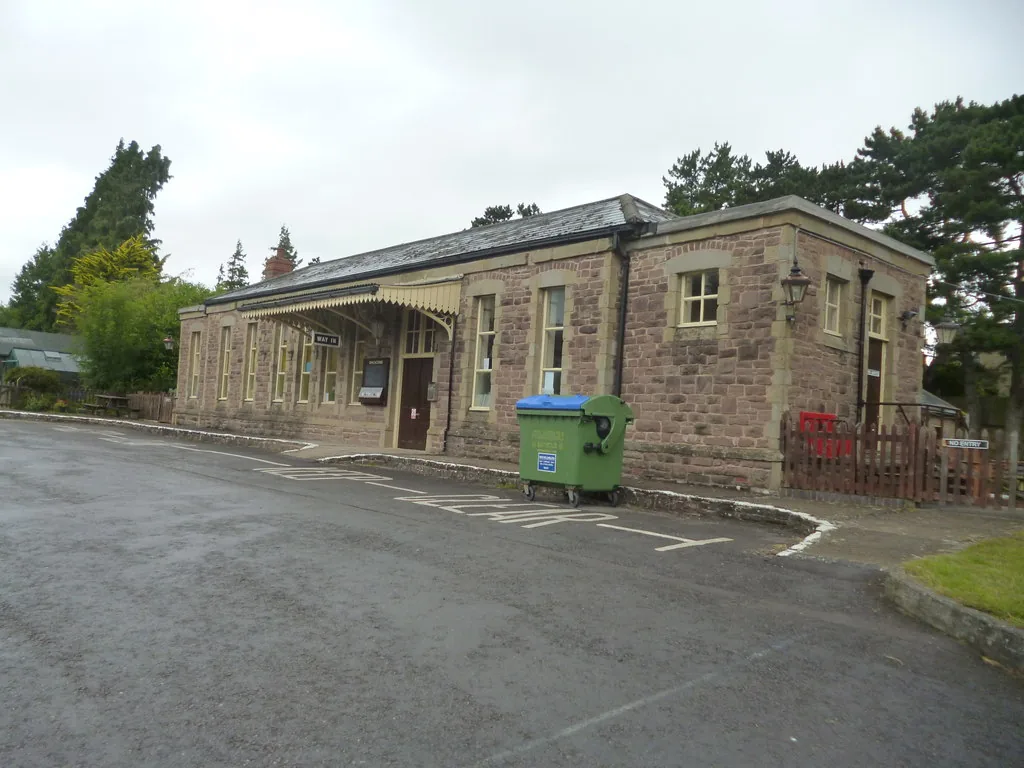
Kembleford railway scenesWinchcombe Railway StationTickets needed
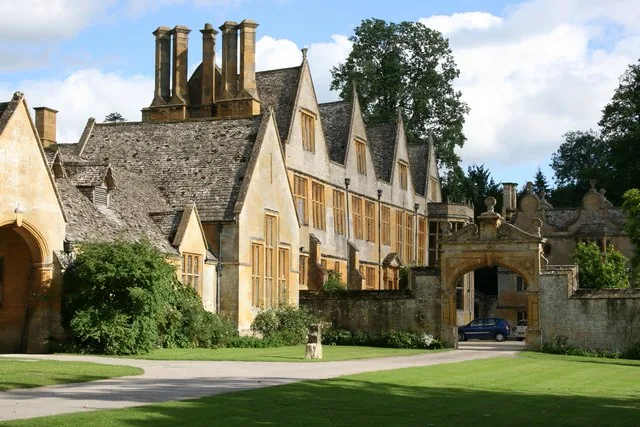
Country-house and estate scenesStanway HouseOpen to visitors
Rural brewery and estate settingDonnington BreweryPrivate

Key locations

Places you can visit

Reading the real Kembleford

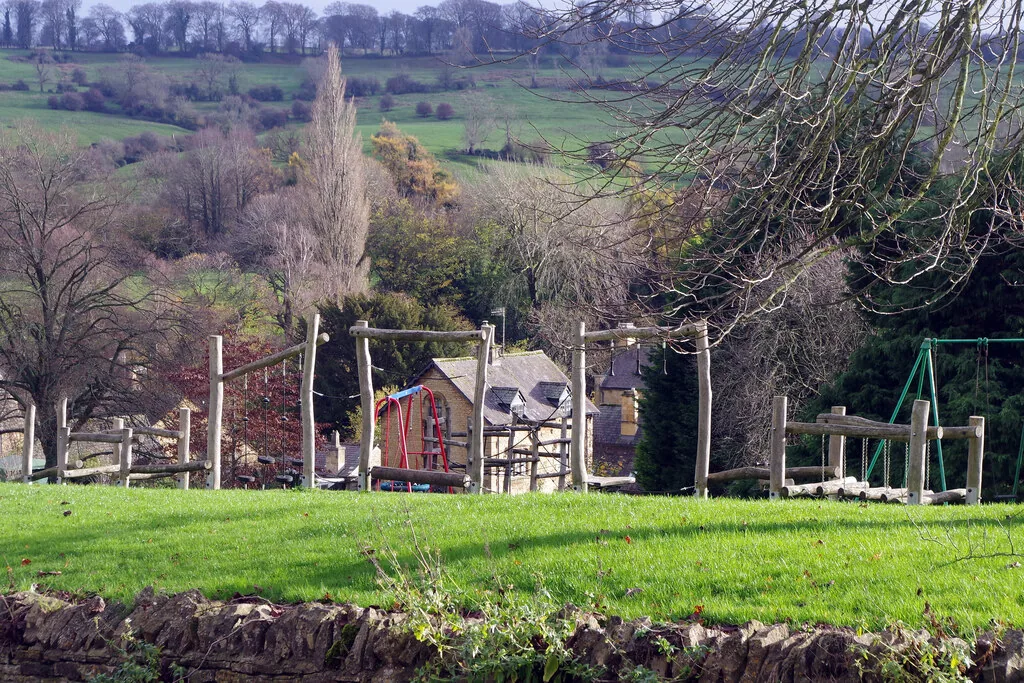
Blockley gives the series a recognisable centre, but the wider filming geography is much larger than the village. A useful first visit starts with its streets and church rather than a drive between every location in the archive. Look at the relationship between the churchyard, surrounding stone buildings and lanes: the programme edits these ordinary spaces into a community that feels continuous on screen. The pleasure comes from noticing those connections, even when modern cars, notices and everyday activity interrupt a remembered view.

A location record can describe quite different experiences. The church is a working place of worship; a castle or garden may be a managed attraction; a private building may be included solely to explain a scene. Read the access description before deciding that a name belongs on your itinerary. An exterior credit does not establish that an interior can be visited, and a building that appears behind a character may have no visitor operation at all. The location pages explain those distinctions so that you can choose places offering a worthwhile lawful visit.

The railway and castle cluster around Winchcombe provides a different way into the series. Preserved railway architecture and Sudeley’s managed visitor grounds offer more than a brief roadside photograph. Build that day around the relevant operators’ calendars, leaving time for the attraction itself. Winchcombe station is at Greet, so a station visit and a walk in the town should be planned as distinct stops. Stanway belongs in the same broad planning area, but it needs its own access check rather than an assumption that every estate building welcomes casual visitors.

Some locations make sense only in their own season. At Cotswold Lavender the fields are agricultural land, and flowering, harvesting and the public visitor season determine the experience. Choose it because you want the farm visit as well as the screen connection. Other routes suit an urban day in Gloucester or Cheltenham, where civic buildings, theatres and public streets broaden the programme’s visual world beyond the village. These are alternatives to another long rural loop, particularly for visitors who prefer fewer transfers.

Use an episode page when you want to identify a specific story, then return to the location page to plan access. A named episode association is narrower than a general production connection: neither should be stretched into a claim that every part of a building appeared in that episode. Keeping those two questions separate makes the archive useful both for viewers tracing a scene and for companions who simply want an enjoyable Cotswolds day.

Visitor information: blockleychurch.org.uk · gwsr.com · sudeleycastle.co.uk · cotswoldlavender.co.uk

Plan your trip

Start with the places that are open.

Use the visiting guide for transport, seasonal access and respectful visiting advice.

Go deeper

The Kembleford Files

Go deeper into Father Brown with the dedicated sister site.

Visit The Kembleford Files ↗

Common questions

Planning a Father Brown location visit

Where was Father Brown filmed?

Father Brown used locations across The Cotswolds, including Blockley, Sudeley Castle, Winchcombe Railway.

Can you visit the filming locations?

Yes, several listed locations are open, ticketed or visible from public space. Each place carries its own access label.

Are private locations shown on the map?

No. Private homes, working farms and restricted places are kept off visitor maps.

What is the best place to start?

Blockley is a practical first stop for this guide.

Sources

Guide references support the documented places and screen connections described here. Visitor planning sources cover travel, facilities or venue arrangements; their inclusion does not establish a filming claim or confirm that access is unchanged today.

Guide references

Visitor planning sources

Evidence and responsible visiting

This is a selected catalogue of documented places, not an exhaustive list of every camera position. A production-level filming credit does not prove which episode, room or viewpoint was used. Location pages separate filming sources from current visitor information.

When to leave a stop out

A screen connection alone does not make a place worth a special journey. These examples use the catalogue’s existing access and visit-duration notes; they are not a popularity ranking.

  • Blockley Vicarage: Skip it as a destination unless the owner or operator advertises legitimate public access; the production credit is not permission to approach.
  • Cheltenham Town Hall: Skip it if reaching the location requires a special journey; it works best as a short addition to an existing route.
  • Blockley: Skip it if you need a guaranteed set-piece or a self-contained attraction; the value may depend on the wider route and the place itself.
Take photographs without intruding
  • Choose a permitted public viewpoint or an admitted visitor area. A screen credit does not give permission to enter a home, school, working site or closed room.
  • Keep paths, roads, doors and business entrances clear. Do not step into traffic, railway land or unstable ground to reproduce a camera angle.
  • Give residents, pupils, worshippers and staff privacy. Avoid making identifiable people the subject of a comparison photograph without their agreement.
  • Ask before photographing interiors and follow the venue’s current signs and staff instructions. Check flash, tripod and filming rules separately; an ordinary entry ticket is not a commercial photography permit.
  • Check the relevant permissions before using a drone or organising a shoot. If the safe permitted view does not match the screen, keep the visit rather than forcing the photograph.

Check these operator rules

Policy contents reviewed 18 October 2026. These are selected operator rules, not permission for every venue or room in this guide. Recheck the source and local instructions before using a camera.

National Trust properties

Scope: The named Trust property’s admitted visitor areas; ask locally before indoor photography.

Private non-commercial photography is generally welcomed, but indoor permission depends on the property. Ask staff or volunteers; indoor flash and tripods are prohibited. Other purposes need advance agreement. This policy does not cover a privately operated house simply because it appears in the same guide.

Operator photography policy ↗

Known limits in this guide

Photographic coverage

These public-place records have no location photograph in this guide. A photograph of a different place is not used as a substitute.

  • Gloucester Prison
  • Greet Tunnel
Titles without a linked location

No title-specific place is attached to these episode or film records in this catalogue. This is a research gap, not a claim that no real location was used.

  • The Hammer of God
  • The Flying Stars
  • The Wrong Shape
  • The Man in the Tree
  • The Devil's Dust
  • The Face of Death
  • The Mayor and the Magician
  • The Ghost in the Machine
  • The Maddest of All
  • The Shadow of the Scaffold
  • The Daughters of Jerusalem
  • The Prize of Colonel Gerard
  • The Grim Reaper
  • The Invisible Man
  • The Sign of the Broken Sword
  • The Last Man
  • The Upcott Fraternity
  • The Kembleford Boggart
  • The Lair of the Libertines
  • The Truth in the Wine
  • The Standing Stones
  • The Deadly Seal
  • The Owl of Minerva
  • The Brewer's Daughter
  • The Hangman's Demise
  • The Crackpot of the Empire
  • The Daughter of Autolycus
  • The Rod of Asclepius
  • The Missing Man
  • The Resurrectionists
  • The Sins of the Father
  • The Wrath of Baron Samdi
  • The Star of Jacob
  • The Labyrinth of the Minotaur
  • The Eve of St John
  • The Chedworth Cyclone
  • The Hand of Lucia
  • The Eagle and the Daw
  • The Smallest of Things
  • The Crimson Feather
  • The Lepidopterist's Companion
  • The Alchemist's Secret
  • The Sins of Others
  • The Theatre of the Invisible
  • The Tanganyika Green
  • The Fire in the Sky
  • The Penitent Man
  • The Tree of Truth
  • The Jackdaw's Revenge
  • The Kembleford Dragon
  • The Angel of Mercy
  • The Face of the Enemy
  • The Devil You Know
  • The Dance of Death
  • The Cat of Mastigatus
  • The Flower of the Fairway
  • The Two Deaths of Hercule Flambeau
  • The Passing Bell
  • The Whistle in the Dark
  • The Demise of the Debutante
  • The Darkest Noon
  • The Sacrifice of Tantalus
  • The House of God
  • The Blood of the Anarchists
  • The Skylark Scandal
  • The Honourable Thief
  • The Celestial Choir
  • The Queen Bee
  • The Scales of Justice
  • The Wisdom of the Fool
  • The Folly of Jephthah
  • The Numbers of the Beast
  • The River Corrupted
  • The Curse of the Aesthetic
  • The Fall of the House of St Gardner
  • The Menace of Mephistopheles
  • The Viper's Tongue
  • The Requiem for the Dead
  • The Children of Kalon
  • The Final Devotion
  • The New Order
  • The Island of Dreams
  • The Wayward Girls
  • The Enigma of Antigonish
  • The Red Death
  • The Company of Men
  • The Gardeners of Eden
  • The Beast of Wedlock
  • The Royal Visit
  • The Show Must Go On
  • The Sands of Time
  • The Wheels of Wrath
  • The Serpent Within
  • The Kembleston Olimpicks
  • The Forensic Nun
  • The Hermit of Hazelnut Cottage
  • The Last Supper
  • The Father, The Son
  • The Quill of Osric
  • The Word of the Condemned
  • The Last Tango in Kembleford
  • The Dead of Night
  • The Scars of War
  • The Battle of Kembleford
  • The Kembleston Players
  • The Horns of Cernunnos
  • The Invisible Friends
  • The Cup of Calabria
  • The Lord of the Dance
  • The Deserving Poor
  • The Sisters of Aeschylus
  • The Puzzle of Banburismus
  • The Blessing of the Father
  • The Good Refuge
  • The Hole in My Heart
  • The Crackpot and the Dummy
  • The Shadow of Lazarus
  • The Obedient Wife
  • The Bodhi Tree
  • The Oath of Silence
  • The Power of Suggestion
  • The Bishop's Revenge
Location records without a title-specific link

These location records have no assigned episode or film link in the retained catalogue. Their programme-level connection does not prove a particular scene.

  • Blockley
  • Church of St Peter & St Paul
  • Blockley Vicarage
  • Moreton-in-Marsh
  • Stanway House
  • Donnington Brewery
  • Notgrove
  • Pittville Pump Room
  • Cheltenham Town Hall
  • Princess Hall
  • Broughton Castle
  • Upper Slaughter
  • Worcester Guildhall
  • Shire Hall and former Crown Court
  • Bloxham School
  • Guiting Power
  • Cornwell
  • Quaker Meeting House
  • Ashdown Camp
  • Batsford
  • Kirtlington Park
  • Château Impney
  • The Theatre Chipping Norton
  • The Fleece Inn
  • Great Witley Church
  • Worcester Cathedral Belfry
  • Bretforton Manor
  • Coach & Horses
  • Cornbury Park
  • Gloucester Cathedral
  • Dumbleton
  • Everyman Theatre
  • Fire Service College
  • Gloucester Prison
  • Greet Tunnel
  • Hatherop Castle
  • Ilmington Manor
  • Little Wolford Manor
  • Lower Slaughter
  • Former Moreton-in-Marsh Hospital
  • Norton Hall
  • Peelers Court
  • Rollright Stones
  • Rous Lench Court
  • Sezincote House
  • Stanbrook Abbey
  • Stanway Cricket Pavilion
  • Stanway Viaduct
  • Upton House
  • Weedon Bec Ordnance Depot
  • Wormington Grange
  • Yarnton Manor
Community provenance in retained source fields

These retained citation fields point to community reference or image archives. Other supporting references may exist in the guide; this field alone does not establish production corroboration.

  • Berkeley Castle
  • Worcester Guildhall
  • Bloxham School
  • Princethorpe College
  • Spetchley Park Gardens
  • Kenilworth Castle
  • Chastleton House
  • Snowshill Manor and Garden
  • Cornwell
  • Ashdown Camp
  • Alscot Park
  • All Saints Church, Spetchley
  • Batsford
  • Broadway Tower
  • Worcester Cathedral Belfry
  • Bretforton Manor
  • Cornbury Park
  • Coughton Court
  • Gloucester Cathedral
  • Ditchley Park
  • Dumbleton
  • Everyman Theatre
  • Fire Service College
  • Gloucester Prison
  • Greet Tunnel
  • Hatherop Castle
  • Ilmington Manor
  • Kiftsgate Court Gardens
  • Little Wolford Manor
  • Lower Slaughter
  • Congregational Church
  • Former Moreton-in-Marsh Hospital
  • National Waterways Museum Gloucester
  • Norton Hall
  • Peelers Court
  • Rollright Stones
  • Rous Lench Court
  • Sezincote House
  • Shelsley Walsh
  • Snowshill Arms
  • Stanbrook Abbey
  • Stanway Cricket Pavilion
  • Stanway Viaduct
  • Tewkesbury Town Hall
  • Toddington Railway Station
  • Upper Court
  • Upton House
  • Weedon Bec Ordnance Depot
  • Wormington Grange
  • Yarnton Manor
Visitor context, not a filming claim

These records are retained as nearby visitor context. They are not promoted into confirmed filming credits.

  • Congregational Church
  • Snowshill Arms
Specific filming details left unresolved

These particular room, episode or viewpoint limits are stated in the existing record. General visitor etiquette is not automatically classified as filming uncertainty.

  • Stanway House: Official tourism confirms both productions, not Lambeth Palace/Thomas More or an exact Father Brown identity.

Download the current catalogue’s known-gap register (JSON). It lists defined catalogue limits, not a complete filming census or an instruction to visit private places.

Read the access notes for each place. Private homes and working sites are context, not invitations to enter. Keep doors, roads and paths clear; give worship, residents and ordinary business priority over comparison photographs.

Location list reviewed 18 October 2026. Opening arrangements are separate: use each venue’s official information before travelling.

How we check filming evidence · Suggest a sourced correction to this guide